


Astrophotography is completely underrated yet sits right at the intersection of science and art. You’re working with extremely low light, long exposure times, and objects that are constantly moving across the sky – not exactly an easy feat to take on. That’s why astrophotography cameras and motorized tracking systems are so unique.
Unlike standard DSLRs or mirrorless cameras, astrophotography cameras feature highly sensitive CMOS sensors, faster data transfer, and better noise control for long exposures. Pair them with a reliable star tracker, and suddenly capturing crisp Milky Way shots, detailed planetary video, or deep-sky objects becomes something even beginners can confidently take on!
Below, I’ve gone ahead and reviewed the 5 top astrophotography cameras and tracking solutions, breaking down what I liked, what could be improved, and the key specs you should know before making your decision.
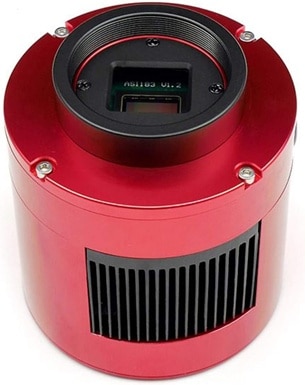
More Features: Fast USB3.0 transfer with 256MB DDR3 buffer
The ASI183MC Pro earns top marks for its fantastic combo of resolution, noise control, and long-exposure performance. Its cooled 20.18 MP sensor makes it ideal for nebulae, galaxies, and detailed lunar mosaics, especially when used with a solid equatorial mount.
The ZWO ASI183MC Pro is a solid astrophotography camera for deep-sky imaging aficionados who prioritize detail, dynamic range, and clean long exposures. Geared up with a 20.18-megapixel cooled CMOS sensor, this camera captures faint galaxies, nebulae, and intricate lunar features with clarity most aren’t able to mimic.
The most notable advantage here is active cooling, which produces smoother images with better color depth. This is especially important when stacking dozens or even hundreds of frames. This makes it an excellent choice for deep-sky astrophotography, where exposure time is everything. The resolution is high enough for detailed mosaics, while still keeping strong sensitivity.
This camera integrates seamlessly with popular astrophotography software like ASIAIR, NINA, and SharpCap, making it flexible for various workflows. However, that same flexibility can also make it a bit overwhelming for newbies. After all, the ASI183MC Pro requires a compatible telescope, mount, power source, and software setup to perform at its best.
It’s not ideal for casual plug-and-play use, but that’s not the audience it’s going for, either. This camera works best when used as part of a well-planned imaging setup. It’s ideal for intermediate and advanced users who want professional-level results without full observatory pricing. It’s obvious that the ASI183MC Pro delivers fantastic value and performance.
What we liked about it
This is a serious deep-sky imaging camera. The ASI183MC Pro features a high-resolution, cooled CMOS sensor that significantly lowers noise with long exposures. It’s great for nebulae, galaxies, and detailed lunar mosaics, making it a top selection with intermediate and advanced astrophotographers.
What could have been better
The learning curve is steeper, and you’ll need a compatible mount, telescope, and software to use it to its full potential.
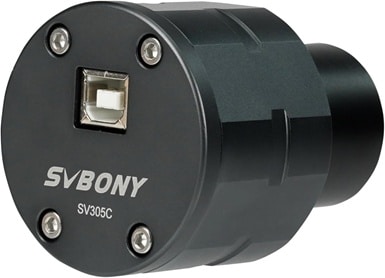
More Features: 2.9um pixel size, 128MB DDRIII image buffer, HCG noise reduction technology
The SV305C is the most affordable entry point for planetary and lunar imaging. It’s simple, lightweight, and forgiving – perfect for those who want hands-on experience without a big investment.
The SVBONY SV305C is one of the most beginner-friendly astrophotography cameras available, making it one of the best picks for newcomers who are still figuring out planetary and lunar imaging. Compact, affordable, and easy to use, this camera practically eliminates the intimidation factor that often comes with astrophotography gear.
In fact, its simplicity is probably its greatest strength The SV305C connects via USB, works with common astronomy software, and doesn’t require cooling systems or complex configurations. This makes it ideal for capturing planets like Jupiter and Saturn, lunar close-ups, and brighter deep-sky objects.
It’s also lightweight enough to use with small telescopes and beginner mounts without worrying about balance problems. Image quality is quite nice for the price, especially when shooting high-frame-rate video for planetary stacking.
However, its lower resolution and limited low-light sensitivity mean it’s not designed for faint nebulae or galaxies. Long exposures can introduce noise, and advanced imagers will eventually outgrow it.
With that being said, the SV305C isn’t pretending it’s a high-end camera. It’s designed as a tool for beginners who want hands-on experience without a big investment.
What we liked about it
The SV305C is easily one of the best budget-friendly astrophotography cameras available. It’s lightweight, easy to use, and ideal for planetary imaging or beginner deep-sky experimentation. For newbies, it offers a low-risk way to learn the basics of astrophotography.
What could have been better
Low-light sensitivity and resolution are limited compared to higher-end models, especially for faint deep-sky objects.
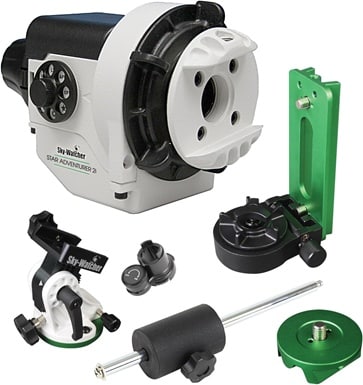
More Features: Includes mount, equatorial base, declination bracket and a Polar scope illuminator
If you’re using a DSLR or mirrorless camera, the Star Adventurer 2i Pro Pack is arguably the most potent piece of gear you can own. Its accurate tracking, built-in WiFi, and portability make long exposures possible without complex mounts.
The Sky-Watcher Star Adventurer 2i Pro Pack is largely considered to be the gold standard for entry-to-intermediate astrophotography tracking, and it makes sense why. While yes, it’s a star tracker and not a camera, it is still a critical piece of gear required for astrophotography.
This compact, motorized mount allows you to take long-exposure images of the night sky without star trailing, allowing for everything from Milky Way panoramas to wide-field nebula shots.
What makes the 2i Pro Pack especially appealing is its included WiFi, which lets you control tracking modes and settings right from your smartphone. That’s a massive upgrade over older trackers and makes field adjustments so much easier. The tracking accuracy is great considering how compact it is, especially when paired with DSLR or mirrorless cameras and lenses up to moderate focal lengths. Once properly polar aligned, it quietly does everything it needs to in the background while you focus on composition and exposure.
Portability is one of the biggest benefits here. The entire setup is light enough for travel, camping, or remote dark-sky locations, making it a favorite among landscape astrophotographers. I will say that setup isn’t the most straightforward as polar alignment isn’t instant, but the learning curve pays off fast!
This isn’t a plug-and-play smart telescope, but if want creative control and basically limitless performance, the Star Adventurer 2i Pro Pack is one of the most reliable tools you can buy. It’s a long-term investment that grows with you.
What we liked about it
The Star Adventurer 2i Pro Pack is one of the most respected pieces of gear in astrophotography. While it’s not a camera itself, it’s a critical piece of the puzzle. This motorized star tracker allows long-exposure shots without star trails and includes built-in WiFi for smartphone control. It’s compact, accurate, and incredibly reliable for wide-field imaging.
What could have been better
It requires a separate camera and lens, and polar alignment still takes a bit of practice for beginners.
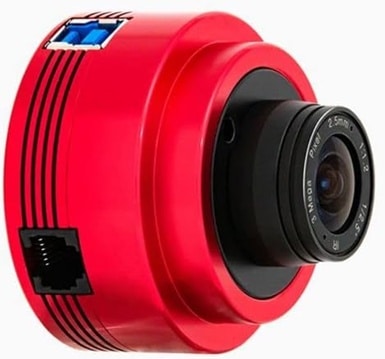
More features: CMOS Sony-IMX678AAQR1-C sensor, 2µm pixel size, 47.5fps
For those prioritizing planets, the ASI678MC is the clear winner. High frame rates and sharp contrast make it ideal for stacking thousands of frames to pull out fine atmospheric detail.
The ZWO ASI678MC is a high-performance planetary and lunar imaging camera known for its speed and precision. With an 8.29-megapixel sensor and USB 3.0 connectivity, it’s ideal for capturing high frame rates, critical for freezing atmospheric turbulence when imaging planets.
Pair it with planetary telescopes and Barlow lenses and you’ll be blown away like I was. Its fast data transfer allows you to record thousands of frames in a short time, and if you stack them up, you’ll be treated to incredible surface detail on planets like Mars, Jupiter, and Saturn.
Lunar imaging is another strong suit, with sharp contrast and fine texture across craters and ridges. Unlike deep-sky cameras, the ASI678MC doesn’t rely on cooling or long exposures. Instead, it uses short bursts of high-speed data.. It’s compact, efficient, and widely supported by imaging software.
However, you’ll find that it isn’t ideal for wide-field deep-sky imaging due to its smaller sensor area and lack of cooling. If you want to level up your planetary results without complication, the ASI678MC is one of the best options around.
What we liked about it
The ASI678MC is a top-notch selection for planetary and lunar imaging. Its fast USB 3.0 data transfer and high frame rates make it excellent for catching fine surface detail on planets like Jupiter and Saturn (which are notoriously difficult). It’s compact, efficient, and widely supported by astrophotography software.
What could have been better
Not the best choice for wide-field deep-sky imaging due to a smaller sensor area.
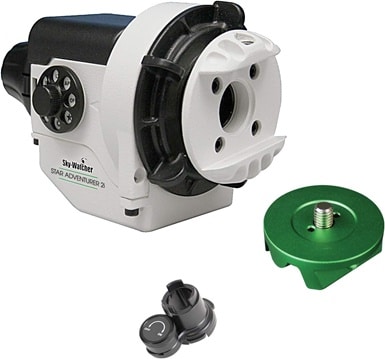
More features: Illuminated polar finderscope, 72 hours from AA batteries with 5v mini-USB input
The Star Adventurer Photo Kit is great for those who want reliable tracking without extra complexity. It’s lighter and simpler than the 2i Pro Pack, making it ideal for travel and casual nightscape shooters.
The Sky-Watcher Star Adventurer Photo Kit is for photographers who want to delve into astrophotography with minimal setup and maximum portability. Like the 2i Pro Pack, it’s a star tracker rather than a camera, but it plays an important role in night-sky imaging.
This kit is especially popular among DSLR and mirrorless shooters who focus (literally) on Milky Way photography, constellations, and wide-field deep-sky objects. It’s lightweight, easy to assemble, and perfect for road trips and dark-sky adventures. Once aligned, it allows significantly longer exposures than a stationary tripod, instantly elevating image quality.
Compared to the 2i Pro Pack, this version is more minimal. It doesn’t come with built-in WiFi and some other more advanced features, but that simplicity is also part of its appeal. There’s less to configure and fewer settings to manage, which is a huge plus for beginners.
However, as you grow more experienced, you may need more advanced tracking modes or app control. Still, for reliable tracking without overcomplicating things, the Star Adventurer Photo Kit remains a trusted and proven choice.
What we liked about it
This simplified Star Adventurer kit is great for photographers using DSLRs or mirrorless cameras. It’s convenient for travel, perfect for Milky Way photography and wide-field astrophotography. Setup is straightforward, making it a great choice for beginners.
What could have been better
No built-in WiFi and fewer advanced tracking options compared to the 2i Pro Pack



 About us
  Contact Us