


Smart digital telescopes have completely transformed the way you explore the night sky – no having to fret with complex setups, no steep learning curve, just powerful astronomy made accessible. These all-in-one systems are perfect if you want insane views of galaxies from your backyard without prior experience.
However, there are a ton of different models on the market, which can make things difficult when narrowing down your options. I’ve gone ahead and covered the 6 best smart digital telescopes available today, highlighting what each model does well, where it falls short, and which type of stargazer it’s best for. Let’s jump right in!

More features: Lightweight design with a compact tripod included.
The Seestar S50 is my top choice for consistently delivering solid deep-sky results in a compact, beginner-friendly design. Its 50mm aperture reveals nebulae, galaxies, and star clusters without compromising portability. The app is intuitive, quick, and reliable.
The ZWO Seestar S50 Smart Digital Telescope is one of the lowest bars of entry into phenomenal modern astronomy. It’s made for beginners and casual skywatchers alike, offering a comprehensive telescope design that eliminates the annoyance of traditional setups. Think automated object finding, motorized tracking, and convenient smartphone control.
All you have to do is connect your smartphone or tablet through the Seestar app, select a target from the built-in celestial catalog, sit back, and let the S50 handle everything. It’ll take care of target acquisition, focusing, tracking, and live-stacked imaging.
Inside the 50 mm apochromatic refractor sits a high-sensitivity camera and dual-band light pollution filter which grabs deep-sky views even from city environments. The live-stacking feature is a favorite, sharpening images over time to reveal galaxies, nebulae, and star clusters in a way that you’d usually only see from more complex setups.
You’ll get to catch Aurora-like nebulae and clusters with an impressive amount of clarity for an entry-level device, and setup literally takes minutes (even if setting it up on your own).
Literally all you have to do to get started is level the tripod, connect, and tap “go.” While the smaller aperture limits fine planetary detail, the Seestar S50 shines for wide-field deep-sky astrophotography and makes stargazing genuinely fun.
Whether you’re stepping it up from regular binoculars or making the leap into your first telescope, the S50’s combination of automation imaging power, and portability makes it a solid choice or budget-friendly smart telescopes.
What we liked about it
The Seestar S50 is hands-down one of the best-value smart telescopes on the market. It’s compact, beginner-friendly, and impressively capable for its size. It’s one of the easiest to set up, the app is intuitive, and automated stacking delivers impressive deep-sky images with little to no effort. This is a favorite among beginners and casual astrophotographers who want results fast.
What could have been better
The small aperture limits faint-object detail, and advanced users may want more manual control. It’s very much a “let the software do the work” experience.
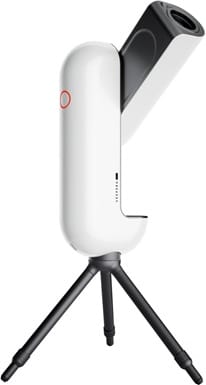
More Features: Water and weather resistant with 226 GB of internal storage and 11 hours of battery life.
With the combination of a great camera, lightweight and a midrange price the Vespera Pro Smart Telescope is a great option for observation of deep space objects as well as the planets.
The Vespera Pro Smart Telescope is perfect for serious stargazers who are on the hunt for high-end astrophotography without the need for turning their backyard into an all-out observatory. A cornerstone in the premium smart telescope category, the Vespera Pro combines advanced optics, powerful imaging, and intelligent automation into a sleek, modern system that feels polished from the moment you turn it on.
What immediately sets the Vespera Pro apart is its CovalENS technology, which works to digitally enhance resolution and field of view by combining various exposures into a single, super-detailed image. This means sharper galaxies, richer nebulae, and cleaner star clusters – especially noticeable in longer watch sessions. The telescope takes care of basically all alignment, tracking, and live stacking on its own, making it easy to use even if you’re a complete noob.
The companion app is smooth, stable, and intuitively designed for both beginners and advanced users. You can choose targets from a nicely curated celestial catalog, fine-tune imaging settings, or just let the telescope run on its own while it builds an image over time. The Observation Station functionality is one of the coolest features for me, letting the Vespera Pro work in extended, semi-autonomous session, which is great for dedicated backyard setups or longer astrophotography nights.
It’s also one of the best for deep-sky imaging. Galaxies and nebulae show up incredibly clear, even from city locations, thanks to smart noise reduction and light-pollution mitigation. While it doesn’t offer traditional eyepiece viewing, the digital experience more than makes up for it with consistently stunning results.
This is definitely more of an “investment” telescope. But for users who value image quality, automation, and long-term astrophotography potential, the Vespera Pro easily justifies its place among the best smart digital telescopes available today.
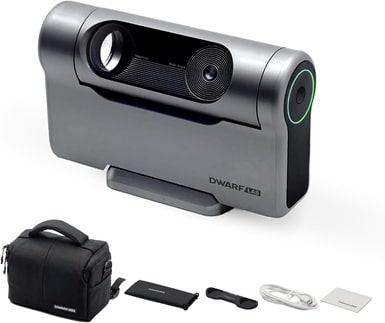
More Features: Advanced Dual Lens design that is good for astronomy and wildlife viewing, AI image processing
If portability is the most important factor for you, you can’t get better than the DWARF 3. It’s lightweight, compact, and very versatile in both astronomy and daytime use.
The DWARF 3 Smart Telescope is THE grab-and-go cosmic explorer. So much so, that I’m going to go out on a limb and say I’d be hard-pressed to find a more portable smart telescope. It’s not only compact, but capable, and surprisingly versatile.
It melds astrophotography and daytime imaging in a small package, making it perfect for travelers, casual astronomers, and anyone who wants to capture impressive views of the sky without hauling around a ton of bulk.
While it may be small in size, the Dwarf 3 delivers massive results. The images I took of the Moon had insane detail and it did a great job of capturing brighter deep-sky objects, and even nebulae with minimal hassle.
Its automatic tracking and smart app control take the guesswork out of alignment and target acquisition, so you can spend more time capturing images and less time messing around with settings.
What really sets it apart is its dual-use format: during the day, you can shoot panoramas or wildlife with decent clarity, and at night it works effortlessly as a potent astronomical camera.
Ultimately, though, portability is the focus of this model. If that’s your top priority, look no further. It’s light enough to carry around the world in a backpack, and the quick-setup workflow means you’ll be checking out the Milky Way or lunar craters in mere minutes.
While it won’t replace larger-aperture observatory models with deep-space detail, the Dwarf 3 hits a nice balance between ease-of-use, compact size, and all-around imaging capabilities.
If you prioritize versatility and affordability and are looking for a smart telescope for real-life applications, the Dwarf 3 is one of the best options on the market today.
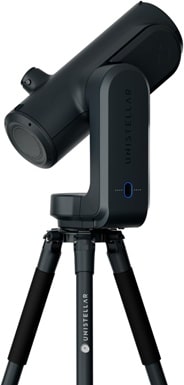
More Features: Automatic alignment with motorized Alt-Az mount, 5,000+ object catalog with a 37-million-star database
The Odyssey PRO is fantastic in city and suburban environments thanks to its improved vision tech. It’s perfect for those looking for strong deep-sky performance without having to travel to dark skies. It offers both app-based imaging and direct optical viewing.
The UNISTELLAR Odyssey PRO Smart Telescope is made to close the gap between average stargazing and professional-grade imaging with a premium selection of smart features and massive optics. Ideal for enthusiasts who want deep-sky viewing and the option to see planets and lunar detail, the Odyssey PRO brings together automated alignment, advanced tracking, and a comprehensive celestial catalog that you can take advantage of through its app.
Odyssey PRO is a star (no pun intended) thanks to its balanced design – powerful enough to register galaxies and nebulae in fine detail but still portable enough to carry to sites with dark skies. The app interface makes object selection, tracking, and image capture intuitive, so you’re not spending hours learning complex menus before you even look up at the sky. Something else I enjoyed was the engaging community on the app, which made it that much more fun.
For me, complex menus will turn me completely off from a device. Not only that, but the inclusion of a traditional eyepiece observation feature offers the best of both worlds: app control and direct optical viewing. My phone connected almost immediately to the Odyssey PRO’s wifi network, and after that, it was basically me selecting which objects I wanted to look at.
Whether you’re interested in astrophotography or simply want stunning real-time sky views, the Odyssey PRO feels like a next-level smart telescope. The price is geared more toward serious hobbyists, but the performance and ease of use justify the investment, especially if you live somewhere with moderate light pollution and want to pull out every bit of detail the night sky has to offer.
What we liked about it
This telescope shines in light-polluted environments. UNISTELLAR’s enhanced vision tech and community features make it a favorite among city-dwelling star lovers. The Odyssey PRO delivers excellent galaxy and nebula detail with minimal effort.
What could have been better
Battery life could be longer, and the premium price may not be ideal for beginners. More manual control options could help capture significantly more stars.
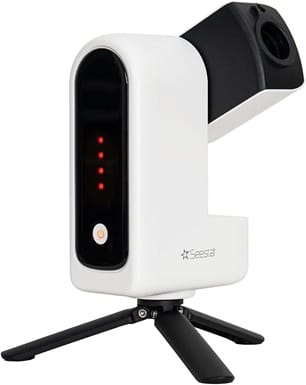
More Features: Stargazing, Scenery & Solar System shooting modes, light pollution filter, one-tap image creation
The Seestar S30 is the most accessible option on the list. It’s smaller and more lightweight than the S50, and great for newbies, families, and travelers who don’t want to finangle through all the different settings.
The ZWO Seestar S30 Smart Digital Telescope brings solid astronomy into an ultra-compact design, making it perfect for beginners, travelers, and anyone who wants an easy path into astrophotography.
Despite its small size, this telescope offers intelligent tracking, app connectivity, and automatic target acquisition so you can start exploring the night sky in minutes. What sets the S30 apart is its dual-lens setup: a telephoto lens for detailed celestial imaging and a wide-angle lens that captures broader sky scenes and even daytime subjects like landscapes and birds.
This effectively makes the S30 a multipurpose optical device, not just a night-sky gadget. The smart app does everything from star calibration and tracking to image capture and live-stacking, which is super helpful for beginners who want results without a steep learning curve. Its lightweight build and straightforward workflow mean you’ll be gazing at star clusters and nebulae with astonishing ease, even in cities.
The smaller aperture naturally limits the faintest deep-sky details compared with larger telescopes, but the overall performance for the price is exceptional. If you want a highly portable smart digital telescope that’s fun, easy to use, and packed with features, the Seestar S30 is a top pick. If you prioritize these features over improved deep-space performance and stronger astrophotos, opt for this model over the S50.
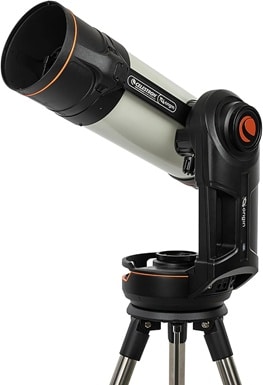
More features: GoTo Mount with dual power sources (battery & AC), AI powered astronomy
The Celestron Origin blew me away with the advanced optics, large aperture, and observatory-level automation made for serious users who want maximum image quality. It’s powerful, polished, and designed to be in permanent use.
For serious beginners and intermediate astrophotographers who want a real observatory experience without all the gear hassle, the Celestron Origin Intelligent Home Observatory provides pro performance in a user-friendly setup. It’s basically a full backyard observatory in a box: premium optics, advanced tracking, and a powerhouse imaging system all combined into one seamless platform.
Celestron comes from literal decades of telescope expertise with a large aperture and sophisticated optics that gather plenty of light, making dim galaxies and nebulae come alive in rich detail. The thing about traditional telescopes is that they require manual alignment and often involve delicate setups.
What I love about the Origin is its automated system, which handles everything from polar alignment to GoTo object slewing through its app interface. It’s honestly so easy, anyone can do it.
The intelligent observatory platform also does a great job with astrophotography, with on-board imaging capabilities that make capturing night-sky targets feel accessible, even if you aren’t someone really experienced in that regard. Combining it with the Origin app opens up a full deep-sky catalog and makes managing exposures, filters, and stacking a breeze.
While it does come with a premium price tag, the Origin is perfect for enthusiasts who are just over compromising. It’s for those who are on the hunt for observatory-level results without building a setup from scratch. For backyard astronomers and serious image seekers, it’s one of the most compelling smart digital telescopes on the market.
What we liked about it
This is the powerhouse of the list. The Celestron Origin feels less like a telescope and more like your own personal observatory. With a huge aperture, top-notch optics, and deep software integration, it’s great for serious astrophotography without the expected complexity. Image quality is on another level, too.
What could have been better
Price and portability. This is not a grab-and-go telescope, and it’s honestly a bit much for casual users.
The aperture of the telescope is the single most important feature of a telescope, smart or traditional. It determines the telescope’s ability to gather light and resolving capability. In smart digital telescopes, you will find telescopes with apertures of 50mm in ultra-portable models to 150mm or larger.
Traditional telescopes require larger apertures because human eyes observe in real-time with limited sensitivity. Smart digital telescopes use electronic sensors and image stacking technology, which can partially compensate for smaller apertures by gathering light over time.
A 50mm smart telescope using exposure stacking can reveal deep-sky objects that would be invisible through a traditional 50mm scope. However, a larger aperture smart telescope will always outperform a smaller one given a similar light sensor.
The optical design matters significantly. Refractor designs provide sharper, higher-contrast images ideal for lunar and planetary observation, with minimal maintenance requirements. Reflector designs have larger apertures at a lower cost and no chromatic aberration, making them excellent for deep-sky imaging.
Lens and mirror coatings will affect light transmission to the sensor. Multi-coated optics can transmit 95% or more of incoming light versus 70-80% for basic coatings. The precision of the optical surfaces, measured in fractions of wavelengths of light, determines how sharp your images will be. Premium smart telescopes will have high-quality glass with minimal optical aberrations across the field of view.
The imaging sensor is the heart of a smart digital telescope and will determine what you will be able to see. Digital telescopes use a CMOS sensor which have replaced older CCD technology with their lower power consumption, faster readout speeds and better sensitivity. The sensor size typically ranges from small smartphone-sized sensors (around 1/2″ to 1/3″) in compact models up to larger APS-C or Micro Four Thirds sensors in high end systems.
Resolution matters, but it’s not everything. A higher pixel count allows gives you finer details and the ability to crop images more but pixel size is equally important. Larger individual pixels (typically 3-5 microns in astronomy cameras) gather more light and produce less noise than smaller pixels crammed onto the same sensor. This is why a 16-megapixel sensor with larger pixels often outperforms a 48-megapixel smartphone sensor for astronomy.
The sensor’s color filter array (typically a Bayer pattern) or whether it’s a monochrome sensor affects image capture. Color sensors are good for one-shot color imaging, while monochrome sensors with filter wheels give you superior resolution and sensitivity for advanced imaging. Most consumer smart telescopes use color sensors for simplicity.
Frame rate and bit depth also are important specifications. A telescope with a higher frame rate will enable planetary imaging that can capture thousands of frames to stack for sharp results, while greater bit depth (12-bit or 14-bit versus 8-bit) preserves more tonal information for post-processing.
The automation features are what really distinguish smart telescopes from traditional ones. Modern smart telescopes have sophisticated alignment procedures that eliminate the tedious manual star-hopping that once defined amateur astronomy. The most advanced systems use plate-solving technology, where the telescope captures an image of the sky, analyzes the star patterns, and determines precisely where it’s pointing by comparing against star catalogs containing millions of objects.
GPS integration is now standard in quality smart telescopes. The system automatically determines its location and time, calculating the positions of celestial objects without requiring manual input. Some systems add electronic compasses and accelerometers to determine initial orientation, achieving alignment in as little as 2-3 minutes from power-on to first target acquisition.
The GoTo database determines what you can observe. Entry-level systems might include catalogs of 5,000-10,000 objects, while comprehensive databases can contain 50,000 or more celestial targets including stars, nebulae, galaxies, star clusters, planets, comets, and asteroids. The quality of the database matters as much as its size – accurate coordinates, updated orbital elements for solar system objects, and descriptive information enhance the observing experience.
Tracking accuracy separates adequate from excellent smart telescopes. Even after finding an object, the telescope must compensate for Earth’s rotation to keep it centered. Basic alt-azimuth mounts require continuous adjustments in both axes to track objects, often introducing field rotation during long exposures.
More sophisticated systems use equatorial mounts or have field de-rotation capabilities. Tracking accuracy is typically specified in arc-seconds of error over time – systems maintaining sub-30 arc-second error over 5-10 minutes enable successful long-exposure imaging.
Very high quality smart telescopes incorporate predictive modeling and periodic error correction. Some telescopes use guide cameras or built-in autoguiding algorithms that monitor a reference star and make real-time corrections to keep objects centered.
Collision detection and safety sensors will prevent the telescope from pointing at the Sun (which could damage sensors) or colliding with the mount or tripod during movement. Intelligent slewing algorithms choose efficient paths between targets while respecting these constraints.
The smartphone or tablet application will serve as your primary interface with the smart telescope and its design and functionality will determine its ease of use. Good apps will give you a balance between functionality and ease of use operation, allowing beginners to start using the telescope within minutes while giving advanced users control over acquisition parameters.
Most smart telescopes use WiFi connectivity with the telescope creating its own access point that your mobile device joins. Newer models have Bluetooth for initial pairing and control which can be more reliable in areas with WiFi interference.
The object selection interface should make finding interesting targets fast and easy! The best implementations offer multiple browsing modes: tonight’s highlights curated based on your location and time, catalogs organized by object type, search functions, and augmented reality views that let you point your device at the sky to identify what’s visible.
Exposure control and image settings determine your ability to optimize captures for different targets. Automatic mode is good for beginners but experienced users will want manual control over exposure time, gain/ISO, and image stacking parameters. They will give you the ability to save custom profiles for different object types (short exposures for planets, long exposures for galaxies).
Live view functionality with real-time stacking transforms the observing experience. As the telescope captures and stacks frames, you will watch faint nebulae and galaxies gradually emerge from the darkness. It is truly a amazing and was impossible with traditional visual astronomy. The app should display histogram information, focus aids, and image statistics to help you optimize captures.
Image management and sharing capabilities matter more than you might expect. When you can save images in high-quality formats, organize observation sessions and easily share your images to social media or with fellow astronomers makes the experience more enjoyable!
Maybe the most important decision in selecting a smart telescope, as it will determine how often you will actually use your telescope. The astronomy community has long recognized that “the best telescope is the one you’ll use most often,” and portability directly affects usage frequency.
Ultra-portable smart telescopes weighing 5-10 pounds can be carried in a backpack, set up in minutes, and used from virtually any location – your backyard, a local park, or a remote dark. These telescopes are perfect for travel astronomy. However, their smaller apertures (typically 50-80mm) and compact sensors limit their deep-sky performance. They’re excellent for lunar observation, bright planets, and brighter deep-sky objects, but they will struggle with faint galaxies and nebulae even with extended viewing times.
Mid-weight systems in the 12-20 pound range will offer better optical performance with apertures of 100-130mm while fitting in the trunk of your car. These are the sweet spot for many amateur astronomers – capable enough to reveal impressive detail in hundreds of deep-sky objects, but portable enough for regular use. Setup time will be extended 10-15 minutes, but the improved image quality should make the extra worth it.
Larger telescopes exceeding 30 pounds with apertures of 150mm or greater approach the performance of professional equipment but require a major commitment to transport and setup.
These telescopes are better suited for a permanent installation or dedicated enthusiasts willing to invest a major effort for the best performance. The extra light-gathering ability and resolution of these telescopes can reveal breathtaking details in even dim targets.
To figure out what is best for you, consider your typical observing scenario realistically. If you live in a light-polluted city and must drive 30-60 minutes to reach acceptable skies, a telescope that’s difficult to transport will see limited use. However, if you have a dedicated dark-sky observing location with permanent setup capability, maximizing aperture and performance makes sense.
Power considerations are extremely important with smart telescopes with their electronics, motors, computers, and sensors – all of which require power. A typical observing session may last 2-4 hours, and running out of power mid-session, especially after traveling to a remote dark-sky location would be aggravating to say the least!
Internal battery capacity can vary widely across models. Compact smart telescopes might include 20-40 Wh batteries providing 2-3 hours of runtime, while larger systems can incorporate 100+ Wh batteries for all-night sessions. However, runtime depends heavily on usage patterns – aggressive slewing between many targets, continuous imaging with minimal idle time, and cold temperatures all reduce battery life.
The ability to use external power sources can greatly increase a smart telescope’s operating time. Many systems include USB-C or DC power inputs that accept external battery packs, allowing indefinite operation with sufficient power reserves. A 20,000 mAh USB power bank (approximately 74 Wh) can extend a compact telescope’s runtime by 4-6 hours or more. For serious observers, 200-500 Wh portable power stations enable all-night imaging sessions even with power-hungry equipment.
Cold weather can greatly affect battery performance – lithium-ion batteries can lose 20-40% of their capacity at temperatures near freezing. Smart telescopes designed for serious use include battery warming systems or recommend keeping external batteries insulated. Some advanced observers employ heated battery pouches or keep power supplies in insulated containers.
Power management features in a quality telescope will include a sleep mode that will reduce power consumption during idle periods and power-saving settings that dim displays or reduce tracking update rates when precision isn’t critical.
Charging time and charging flexibility matter for multi-night observing trips or star parties. Systems supporting USB Power Delivery fast charging can recharge in 2-3 hours versus 6-8 hours for standard charging. Some telescopes can operate while charging, enabling continuous use with AC power when available.
Smart telescopes can vary dramatically in price from $300 for entry-level models to $5,000+ for a premium telescope, and understanding the features at each level helps you choose the best model for you.
Entry-level telescopes in the ($300-$800) range typically feature 50-60mm apertures, basic sensors, simplified mounts, and fundamental automation. These telescopes are great for beginners with easier operation than traditional telescopes while providing good views of the Moon, planets, and brighter deep-sky objects. The imaging quality is good enough to share on social media. These systems will let you know whether astronomy interests you before committing to more expensive equipment.
Mid-range options ($800-$2,500) represent the most competitive market segment, where manufacturers differentiate through optical quality, sensor capabilities, software and build quality. These typically have 80-120mm apertures, better sensors with enhanced sensitivity, more robust mounts with improved tracking, and comprehensive object databases. The imaging performance is significantly better and you’ll capture impressive detail in nebulae, galaxies, and star clusters.
Premium systems ($2,500-$5,000+) approach professional-grade performance with large apertures (130-150mm+), exceptional sensors, precision mounts, advanced cooling systems, and refined software. These systems produce publication-quality images and will satisfy serious amateur astronomers. The improvements become incremental rather than transformational – a $4,000 system might capture 30-40% more detail and reach fainter objects than a $1,500 system, which matters greatly to dedicated enthusiasts but may not justify the cost for casual users.
Consider the opportunity cost against alternatives. For equivalent money, you can purchase a larger traditional telescope with superior optics but requiring more skill, a dedicated astrophotography setup with greater ultimate capability but much steeper learning curve, or multiple smaller instruments for different purposes. Smart telescopes excel at accessibility and convenience.


 About us
  Contact Us