


If you’ve ever shopped for binoculars and felt personally attacked by words like “exit pupil,” “phase correction,” or “BaK-4 prisms,” you’re not alone. When I first entered the world of binocular terminology, I felt like I was a lost cause, constantly Googling everything. It can definitely feel like a secret club where everyone forgot to explain the rules, at first.
But here’s the good news: once you understand a few key terms, choosing the right pair of binoculars gets SO much easier.
Whether you’re buying binoculars for birdwatching, hiking, hunting, travel, or sports, this beginner-friendly glossary breaks down the most important binocular terms in plain English. No nonsense, just clear explanations so you can shop smarter and actually understand what you’re paying for. Let’s jump right in!
Let’s start with the most visible part of any binocular description, because this is probably the only thing I had even the vaguest grasp on when I first started out.
The first number tells you how many times closer an object appears.
Higher magnification sounds better, but it’s not always ideal. As magnification increases:
For most beginners, 8x binoculars are easier to use and more stable than 10x. However, 10x is definitely doable and offers a way to increase your skills and versatility as time goes on without having to purchase a separate pair of binoculars.
The second number refers to the size of the front lenses in millimeters. This is where confusion started setting in for me, but it’s actually pretty straightforward.
For example:
If you’re planning low-light use (like dawn birding or hunting), larger objective lenses play a big role here in your experience.
Field of view tells you how wide the viewing area is through the binoculars. This is hugely important, as smaller fields of view can really limit you.
It’s usually measured in:
A wider field of view makes it easier to:
Higher magnification typically reduces field of view, so there’s always a tradeoff here.
This one sounds technical (and a little scary?), but it’s actually quite simple.
The exit pupil is the little circle of light you see when holding binoculars out at an arm’s length. It is also what determines how bright the image appears, especially in low light. If you’ll be using them in anything but brighter conditions, definitely pay special attention to this term.
You calculate it like this:
Objective lens ÷ Magnification = Exit pupil
Example:
Larger exit pupils (around 4–7mm) perform better in dim conditions.
If you’re using your binoculars at sunrise or watching wildlife at dusk, this is super important.
Eye relief refers to the distance between your eye and the eyepiece where you can still see the full image. As someone who wears glasses quite often, I realized that this makes a massive difference in comfort.
Why it matters:
If you wear glasses, look for at least 15mm of eye relief. Otherwise, you may not see the entire field of view, AND you may get awkward red marks around where you had your binoculars sitting against your face (speaking from firsthand experience).
Prisms are what flip the image right-side up inside the binocular.
Roof prism binoculars dominate the modern market, but Porro prism models can offer excellent optical performance for less money.
These refer to the type of glass used in the prisms.
If image quality is one of your top priorities (and it probably should be), BaK-4 is generally the way to go here.
Lens coatings reduce glare and improve light transmission. I’ll admit that I didn’t place much importance on this spec until I used a friend’s that had fully multi-coated lenses and I was blown away by the improved contrast.
Here’s what the terms mean:
Fully multi-coated binoculars offer better brightness and contrast. If you see this listed, it’s a good sign.
My friend unfortunately learned this one the hard way one rainy evening of leaving his outside his tent. It turns out that water-resistant does NOT mean waterproof.
Many waterproof binoculars are also:
If you’re hiking, boating, or birding in unpredictable weather, waterproof is worth it. Also, if you’re like me and tend to somehow be clumsy in ways other people can’t even fathom, do yourself a favor and get waterproof for the added peace of mind.
Fog-proof binoculars are usually nitrogen- or argon-purged.
This prevents internal fogging when moving between temperature extremes.
If you’ve ever taken optics from a cold car into warm air and watched them fog up instantly, you already know that this factor can be a game-changer.
Close focus tells you how near an object can be while still remaining sharp.
For example:
Birdwatchers and nature enthusiasts should pay attention to this spec! My first pair was the former, and I wanted to use them for going up in the hills and spotting deer, elk, etc., and I couldn’t understand why they were so blurry. If only I’d known better!
This adjusts the binocular barrels to match the distance between your eyes.
Most binoculars accommodate a wide range, but this is especially important for:
If the IPD doesn’t adjust properly, the image won’t align correctly, or it’ll just feel awkward.
The diopter lets you adjust focus independently for one eye.
Because most people have slight differences in vision between eyes, this helps fine-tune sharpness. I have significantly better vision in one eye, so this helped immensely.
Typically, you:
It’s an often-overlooked feature that makes a great difference if your eyes aren’t similar in vision.
This term appears often in hunting optics, generally speaking, and measures theoretical performance in low-light conditions.
It combines magnification and objective lens size.
While this is handy in theory, real-world brightness depends more on lens quality and coatings. You can probably overlook this one a bit and still be just fine, if you aren’t looking for hunting purposes.
Wide-angle binoculars offer a broader field of view.
They’re great for:
But they may slightly reduce edge sharpness in budget models. I find this spec to be most important when you’re tracking objects with speed and agility.
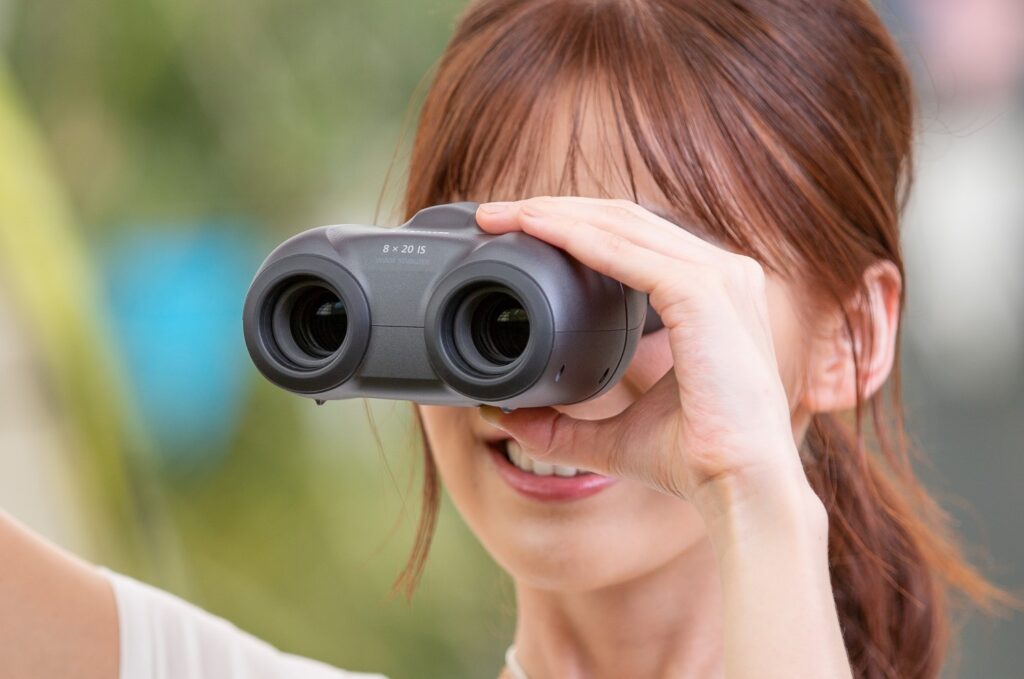
Some high-end binoculars include electronic image stabilization. I was blown away when I found this out, as I’d apparently been living under a rock.
This reduces hand shake at higher magnifications.
It’s especially helpful at 12x or above, though the tradeoff here is cost and weight.
Understanding binocular terminology makes all the difference in your experience, and whether you catch that bird you’ve been eyeing for months now, in your range of view.
If you’re a beginner, here’s the quick cheat sheet:
Once you decipher these terms, shopping for binoculars becomes way less overwhelming, and even kinda fun! It makes all the difference between waiting to upgrade to another pair and finding one that completely transforms your experience!

 About us
  Contact Us